How Did a Dietitian End Up in a Microbiology Laboratory?
By Dr. Fatma Koç
Career paths in microbiome research are rarely linear. Mine began in dietetics, but curiosity eventually led me into microbiology laboratories, gut microbes, and microbial metabolites - places I never expected to feel so much at home.
Yes, I am a dietitian. But interestingly, I now have more experience in microbiology than in nutrition science and dietetics. So, can a dietitian become a microbiologist? I suppose I might be one example that the answer is yes!
I would like to share my story and hopefully it brings some motivation to those who feel their background does not perfectly “fit” their current interests.
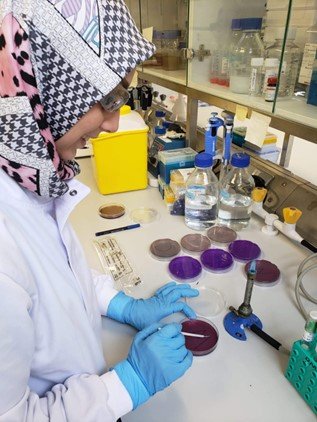
Erasmus internship at Teagasc Moorepark Research Centre (Summer, 2019)
Meeting My “Tiny Friends”
My journey with microorganisms began during the second year of my bachelor’s degree - about 12 years ago. Since my childhood, I had always dreamed of working in a laboratory. I even imagined having a lab in my house! In a way, that dream came true - the lab became my second home!
I started working as a student assistant in the Microbiology Laboratory at Istanbul Medipol University in Türkiye, where I completed both my bachelor’s and master’s degrees. Initially, I was interested in probiotics and prebiotics. As a dietitian, I was deeply curious about the symbiotic relationship between microbes and their favourite foods.
My first small research project focused on identifying the probiotic potential of lactic acid bacteria isolated from homemade pickles. I was proud to become the first undergraduate student in my university to receive student research funding. That moment strengthened my confidence and my commitment to research.
From Nutrition to the Gut Microbiome
I always knew I wanted to pursue a master’s degree and eventually a PhD. I decided to specialise in medical microbiology, focusing on the gut microbiome. During my master’s degree, I investigated how Ramadan fasting influences gut microbiota composition using 16S rRNA gene sequencing. We observed fasting‑associated shifts in microbial diversity, including an increase in short‑chain fatty acid-producing bacteria, which sparked my lasting interest in microbial function rather than nutrition alone.
At the same time, I worked as a teaching assistant in the School of Medicine. Teaching students about my “favourite bugs” was incredibly rewarding and helped me grow both academically and personally.
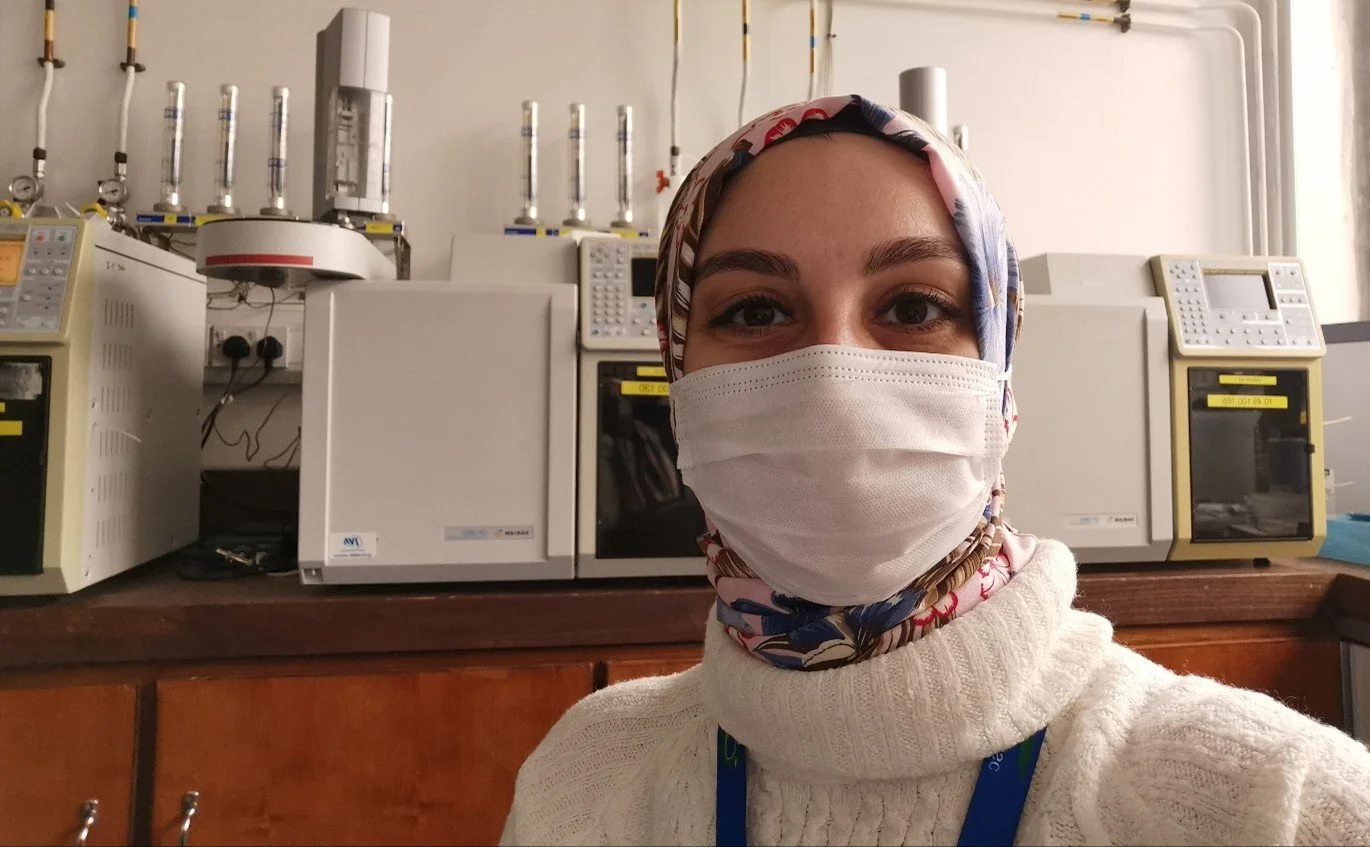
First year of PhD and my dear friend gas chromatography (Sometime in 2021)
While working on gut microbiome composition, I became very interested in microbial metabolites. I wanted to understand not only who was there, but what they were doing. This curiosity led me to apply for an Erasmus+ internship with Prof. Catherine Stanton, who later became one of my PhD supervisors. Working with her and being part of Teagasc Moorepark Research Centre and APC Microbiome Ireland was an inspiring experience and a major turning point in my career.
Shortly after, I was offered a PhD position. However, just as I passed my English exams and prepared to move, both Ireland and Türkiye announced their first COVID-19 cases. Borders closed. Universities shut down. I had to wait six months before starting my PhD…
I finally arrived in Ireland in November 2020… dark, rainy, and windy. A true Irish welcome!
Expanding My Scientific Toolbox
During my PhD, I investigated how dietary fibres modulate the gut microbiome using in vitro digestion and fermentation models. In my second year, I was awarded the Teagasc Walsh Overseas Travel Award, which gave me the opportunity to spend three months in Canada working on metabolomics research in the laboratory of Prof. David Wishart at the University of Alberta. This experience allowed me to deepen my understanding of microbial metabolites and expand my technical expertise.
In the final year of my PhD, I was honoured to receive first runner-up recognition within my program at the Teagasc Food Research Centre. After completing my PhD, I worked at Abbott Nutrition for a year as a part of the Food Health for Ireland Work Graduate Program. I gained experience in infant formula development and production! During this program, I also completed the Food Safety and Regulation diploma program at UCD and decided to stop there... for now...
Today, I am working as a postdoctoral researcher at APC Microbiome Ireland - a place I dreamed of working at almost a decade ago - with the experts in the field, which I still cannot believe! Currently, I am working on bacteriocin discovery and their applications in food systems. It feels incredibly fulfilling to see all aspects of my background (nutrition and dietetics, microbiology, product development and metabolomics) come together in one research area.
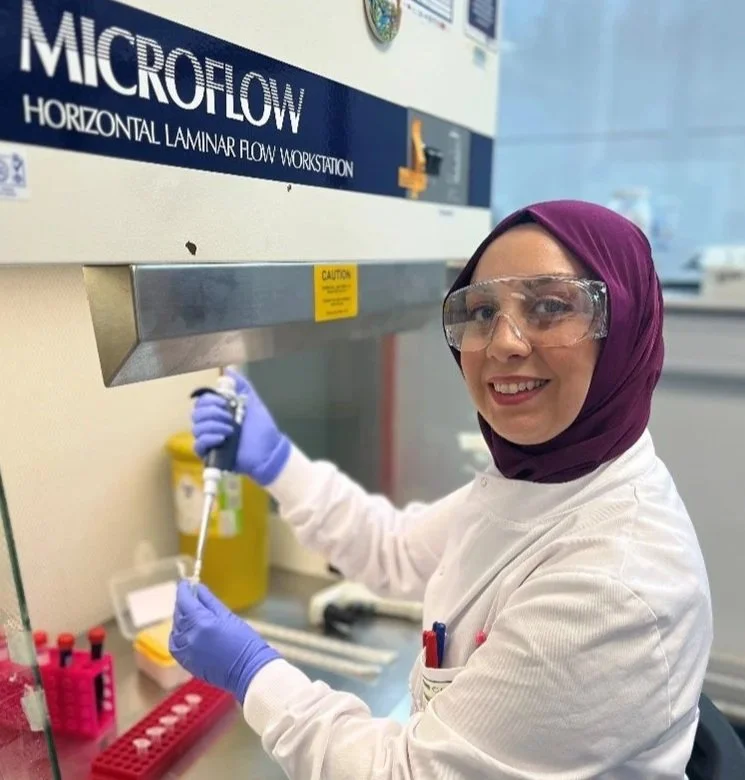
Working happily at the biosafety cabinet with my favourite microorganisms
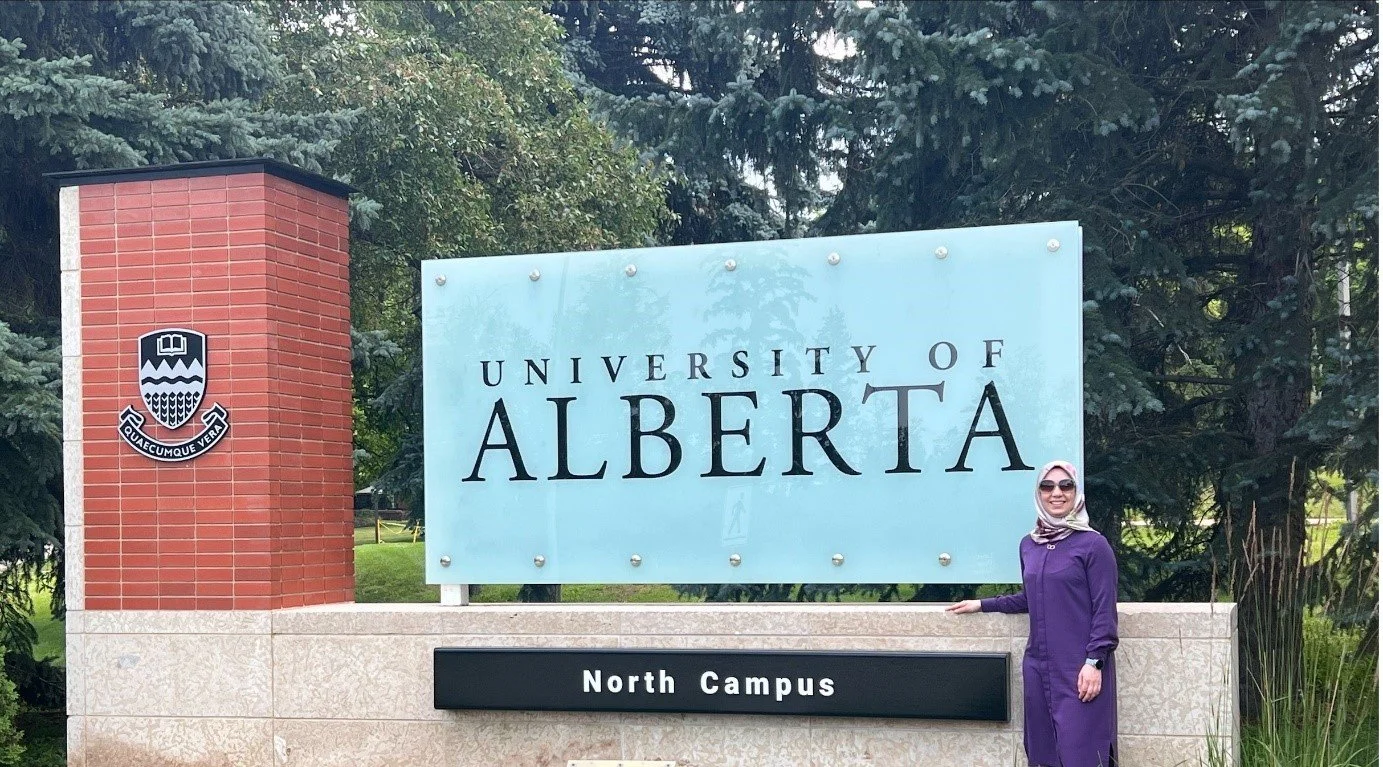
Walsh Scholar Overseas Training at the University of Alberta, Canada (Summer 2023)
A Small Message for Young Scientists
I would like to finish with a simple suggestion:
If you feel that your background does not perfectly match the field you are interested in, try anyway. Science begins with curiosity. It does not matter what you are currently studying or doing. If you are curious and willing to learn, you can become a great scientist.
Your degree does not limit you. Your curiosity defines you!