
Akkermansia muciniphila: A Next‑Generation Biotic for Metabolic Health?
By Ryan Suleman, PhD Candidate
The gut microbiome has become one of the fastest-growing areas of research over the last two decades. As scientists continue to uncover the roles of organisms that were once overlooked or dismissed, we’re beginning to appreciate just how vast the influence of microbes is on human health. Growing interest in one organism has even led to comparisons with weight loss medications such as Ozempic in popular discussion, reflecting interest in its potential role in metabolic health and weight regulation.
At the same time, the medical world has seen an explosion in the use of GLP-1 medications such as Ozempic and Wegovy for weight management and metabolic health. While these medications can be remarkably effective, they also come with side effects. So, could targeting the gut microbiome offer another way to influence metabolic health? Enter Akkermansia.
Akkermansia muciniphila is a strict anaerobe isolated from human feces in 2004, noted mainly for its unusual substrate preference: mucin, the glycoprotein that makes up the protective gel lining our intestines (1). Today it is becoming more intensively studied as a key member of the human gut microbiota, a candidate "next-generation" probiotic, and for its ability to maintain metabolic integrity in the human gut. Here's where the science stands, and where it's heading.

Ryan carrying out his PhD research in the anaerobic chamber at APC Microbiome Ireland
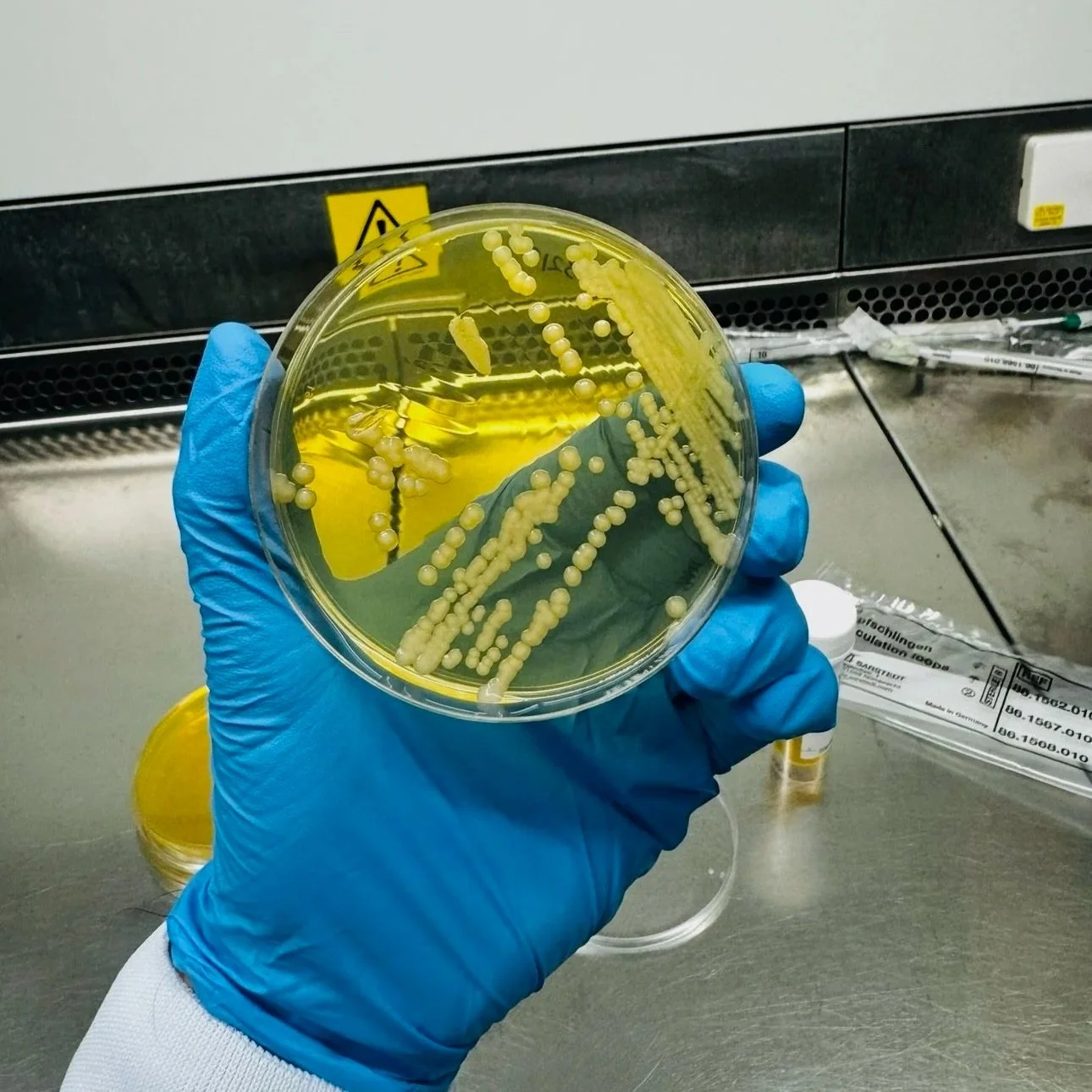
A. muciniphila growing in the lab
A mucin specialist with an outsized effect on the gut barrier
A. muciniphila colonizes the intestinal mucus layer and uses mucin as a source of carbon and nitrogen, producing metabolites including short-chain fatty acids in the process (2). Although mucin degradation might appear detrimental to the intestinal barrier, A. muciniphila can also influence mucus production and composition. Paone et al. (3) recently showed in high-fat diet-fed mice that the organism does more than add mucus but reshapes the glycan composition of the structure of the mucus. However, this relationship is context-dependent. When dietary fibre is scarce, mucus-associated microbes may rely more heavily on host mucins, and fibre deprivation has been associated with a thinner, more penetrable intestinal mucus layer in mice (4).
Specific components of A. muciniphila may contribute to its biological effects through different mechanisms. The outer membrane protein Amuc_1100 has been shown in preclinical studies to signal through TLR2 and contribute to improved gut barrier function, while retaining activity following pasteurization (5). Another secreted protein, P9, has been shown to interact with ICAM-2 and stimulate GLP-1 secretion and improve glucose homeostasis in mice (6). Together, these findings suggest that specific bacterial components may contribute to some of the biological effects associated with A. muciniphila.
What does the human data show?
The best-established human evidence is metabolic. In a proof-of-concept trial by Depommier et al. in 2019 (7), three months of daily supplementation with pasteurized A. muciniphila improved insulin sensitivity by ~30% compared with placebo in adults with overweight or obesity and insulin resistance. The intervention was associated with reductions in markers of liver dysfunction and inflammation, as well as some modest reductions in body weight and fat mass and was well tolerated during the study period.
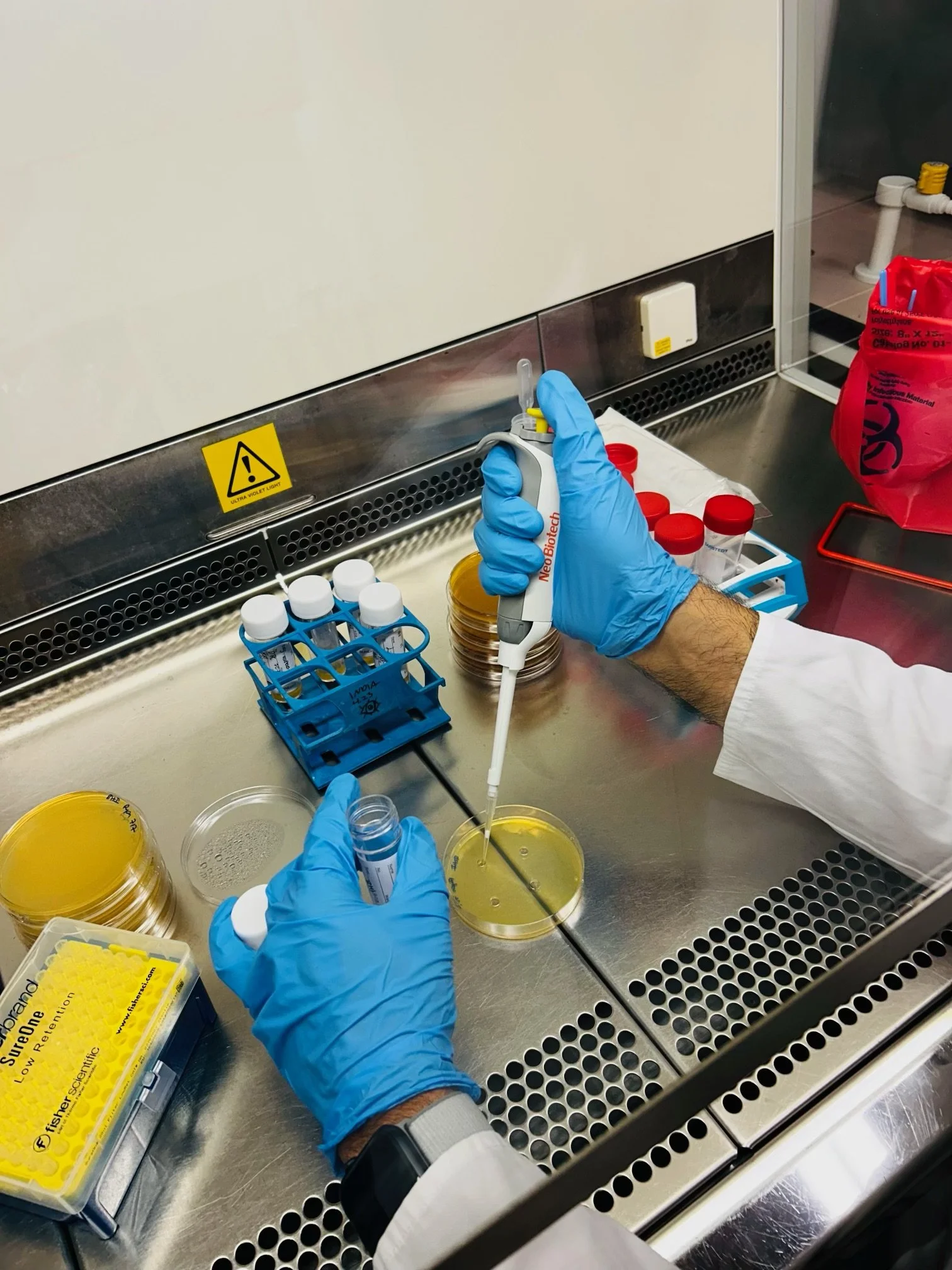
Testing for antimicrobial traits
More recently, a 2026 randomized controlled trial by Suenaert et al. (8) in adults with metabolic syndrome found that pasteurized A. muciniphila MucT improved insulin sensitivity and body composition, but with the effects being most apparent in participants who had low baseline levels of A. muciniphila in their own gut. Together, these findings raise the possibility that baseline abundance of A. muciniphila may influence an individual’s metabolic response to supplementation, highlighting the potential importance of considering baseline microbiome characteristics when evaluating microbiome targeted interventions.
A similar pattern was reported by Zhang et al. (9). In participants with overweight or obesity and type 2 diabetes, supplementation with AKK-WST01 was associated with reductions in body weight and HbA1c among those with low baseline levels of A. muciniphila, whereases participants with higher baseline levels showed less evidence of metabolic benefit. Notably, supplementation did not significantly alter overall gut microbiome composition or a-diversity in either group. These findings further illustrate that baseline abundance of A. muciniphila may influence an individual’s response to supplementation, supporting further investigation into microbiome-informed approaches to metabolic intervention.
Beyond metabolism: Two applications worth watching
Two newer research threads extend well past the metabolic syndrome literature that first brought A. muciniphila to the forefront of the gut microbiome.
The first is cancer immunotherapy. In a study of patients with non-small-cell lung cancer and renal cell carcinoma, Routy et al. (10) found that the presence of A. muciniphila in the gut microbiome was associated with a more favourable response to PD-1-based immunotherapy. The researchers then investigated this relationship experimentally: transferring microbiota from responding patients into mice improved the antitumor effects of PD-1 blockade, whereas microbiota from non-responding patients did not. Oral supplementation with A. muciniphila could restore responsiveness to PD-1 blockade in mice receiving microbiota from non-responders. This effect involved an IL-12-dependent immune response and increased recruitment of CCR9+CXCR3+CD4+ T cells into the mouse tumour microenvironment. Together, these findings provide preclinical evidence that A. muciniphila may influence the response to immune checkpoint therapy, although its use as an adjunct to cancer treatment remains investigational.
The second is healthy aging. Cross-sectional studies of centenarians and supercentenarians repeatedly identify A. muciniphila as one of the taxa enriched in the long-lived individuals (11), and experimental studies suggest that age-associated changes in gut barrier integrity and inflammation may be counteracted by A. muciniphila (12). As with cancer modulation, this is associational human data and is encouraging but not yet a basis for anti-aging claims.
A regulatory milestone, and what it means
The regulatory landscape for A. muciniphila has also developed considerably. In 2025, EFSA concluded that pasteurized A. muciniphila MucT was safe for use as a novel food under specified conditions of use in adults (13). These assessments concern safety rather than clinical efficacy and apply to the specified A. muciniphila preparation than the species as an interchangeable ingredient.
In the United States, a New Dietary ingredient notification for pasteurized A. muciniphila HB05P strain further illustrate the development of strain-specific preparations for commercial use (14). One commercially developed strain is AKK PROBIOÒ (A. muciniphila CGMCC No.20955), a human gut-derived strain developed by Thankcome and available in both live and pasteurized forms (15).
The caveats that matter
Enthusiasm in the medical community is tempered by the fact that much of the mechanistic work on A. muciniphila remains mouse‑based, with uncertain translation to humans. Several human trials suggest that people who already have higher baseline levels of endogenous A. muciniphila see little additional benefit from supplementation, meaning this is unlikely to be a universal intervention (7,8). This highlights the importance of further investigating how baseline microbiome composition and interactions among gut microorganisms influence responses to supplementation. Moreover, "Akkermansia" is not one thing: different strains, and live versus pasteurized preparations, may not have equivalent biological effects. Findings from one strain or preparation shouldn't be generalized to others.
A. muciniphila has moved from an obscure mucin-degrading bacterium to a commercially developed next-generation biotic, while its investigation in metabolic health, oncology and ageing suggests that its potential roles are still being defined. As with any biotic intervention, the strength and applicability of the evidence must be considered in relation to the specific strain, preparation, dose and population studied. Further well-controlled human studies are needed to determine how this organism could be utilized to expand personalized medicine and better understand the full scope of its niche within the gut microbiome. Ultimately, the emerging evidence highlights the importance of considering an individual’s existing microbiome when developing microbiome-targeted interventions, rather than assuming that supplementation will provide the same benefit for everyone.
Disclaimer: The contents of this post are for informational purposes only and are not intended as a substitute for professional medical advice, diagnosis, or treatment.
References
1) Derrien M, Vaughan EE, Plugge CM, de Vos WM. Akkermansia muciniphila gen. nov., sp. nov., a human intestinal mucin-degrading bacterium. Int J Syst Evol Microbiol. 2004 Sep;54(Pt 5):1469-1476. doi: 10.1099/ijs.0.02873-0. PMID: 15388697.
2) Zhang T, Li Q, Cheng L, Buch H, Zhang F. Akkermansia muciniphila is a promising probiotic. Microb Biotechnol. 2019 Nov;12(6):1109-1125. doi: 10.1111/1751-7915.13410. Epub 2019 Apr 21. PMID: 31006995; PMCID: PMC6801136.
3) Paone, P., Petitfils, C., Puel, A., Latousakis, D., de Vos, W. M., Delzenne, N. M., … Cani, P. D. (2026). Akkermansia muciniphila modulates intestinal mucus composition to counteract high-fat diet-induced obesity in mice. Gut Microbes, 18(1). https://doi.org/10.1080/19490976.2025.2612580
4) Wolter, M., Grant, E. T., Boudaud, M., Pudlo, N. A., Pereira, G. V., Eaton, K. A., Martens, E. C., & Desai, M. S. (2024). Diet-driven differential response of Akkermansia muciniphila modulates pathogen susceptibility. Molecular systems biology, 20(6), 596–625. https://doi.org/10.1038/s44320-024-00036-7
5) Plovier, H., Everard, A., Druart, C., Depommier, C., Van Hul, M., Geurts, L., Chilloux, J., Ottman, N., Duparc, T., Lichtenstein, L., Myridakis, A., Delzenne, N. M., Klievink, J., Bhattacharjee, A., van der Ark, K. C., Aalvink, S., Martinez, L. O., Dumas, M. E., Maiter, D., Loumaye, A., … Cani, P. D. (2017). A purified membrane protein from Akkermansia muciniphila or the pasteurized bacterium improves metabolism in obese and diabetic mice. Nature medicine, 23(1), 107–113. https://doi.org/10.1038/nm.4236
6) Yoon, H. S., Cho, C. H., Yun, M. S., Jang, S. J., You, H. J., Kim, J. H., Han, D., Cha, K. H., Moon, S. H., Lee, K., Kim, Y. J., Lee, S. J., Nam, T. W., & Ko, G. (2021). Akkermansia muciniphila secretes a glucagon-like peptide-1-inducing protein that improves glucose homeostasis and ameliorates metabolic disease in mice. Nature microbiology, 6(5), 563–573. https://doi.org/10.1038/s41564-021-00880-5
7) Depommier, C., Everard, A., Druart, C. et al. Supplementation with Akkermansia muciniphila in overweight and obese human volunteers: a proof-of-concept exploratory study. Nat Med 25, 1096–1103 (2019). https://doi.org/10.1038/s41591-019-0495-2
8) Suenaert, P., Segers, A., Rymenans, L., Devroye, H., Moll, J. M., Cani, P. D., & de Vos, W. M. (2026). Effect of pasteurized Akkermansia muciniphila MucT on insulin sensitivity, body composition, and GLP-1 production in subjects with metabolic syndrome: impact of low baseline gut Akkermansia levels. Gut Microbes, 18(1). https://doi.org/10.1080/19490976.2026.2690689
9) Zhang, Y., Liu, R., Chen, Y., Cao, Z., Liu, C., Bao, R., Wang, Y., Huang, S., Pan, S., Qin, L., Wang, J., Ning, G., & Wang, W. (2025). Akkermansia muciniphila supplementation in patients with overweight/obese type 2 diabetes: Efficacy depends on its baseline levels in the gut. Cell Metabolism, 37(3), 592–605.e6. https://doi.org/10.1016/j.cmet.2024.12.010
10) Routy, B., Le Chatelier, E., Derosa, L., Duong, C. P. M., Alou, M. T., Daillère, R., Fluckiger, A., Messaoudene, M., Rauber, C., Roberti, M. P., Fidelle, M., Flament, C., Poirier-Colame, V., Opolon, P., Klein, C., Iribarren, K., Mondragón, L., Jacquelot, N., Qu, B., Ferrere, G., … Zitvogel, L. (2018). Gut microbiome influences efficacy of PD-1-based immunotherapy against epithelial tumors. Science (New York, N.Y.), 359(6371), 91–97.
11) Chen, S., Zhang, Z., Liu, S., Chen, T., Lu, Z., Zhao, W., … Liu, S. (2024). Consistent signatures in the human gut microbiome of longevous populations. Gut Microbes, 16(1). https://doi.org/10.1080/19490976.2024.2393756
12) van der Lugt, B., van Beek, A.A., Aalvink, S. et al. Akkermansia muciniphila ameliorates the age-related decline in colonic mucus thickness and attenuates immune activation in accelerated aging Ercc1−/Δ7 mice. Immun Ageing 16, 6 (2019). https://doi.org/10.1186/s12979-019-0145-z
13) EFSA NDA Panel (EFSA Panel on Nutrition, Novel Foods and Food Allergens), Turck, D., Bohn, T., Cámara, M., Castenmiller, J., De Henauw, S., Jos, Á., Maciuk, A., Mangelsdorf, I., McNulty, B., Naska, A., Pentieva, K., Siani, A., Thies, F., Aguilera-Gómez, M., Frenzel, T., Marcon, F., McArdle, H. J., Moldeus, P., … Hirsch-Ernst, K. I. (2025). Safety of an extension of use of pasteurised Akkermansia muciniphila as a novel food pursuant to Regulation (EU) 2015/2283. EFSA Journal, 23(9), e9632. https://doi.org/10.2903/j.efsa.2025.9632
14) U.S. Food and Drug Administration. Submitted 75-Day Premarket Notifications for New Dietary Ingredients. New Dietary Ingredient Notification No. 1438: Pasteurized Akkermansia muciniphila HB05P (HB05P®), HealthBiome Inc. Submitted September 22, 2025; FDA response December 10, 2025.
15) Zhang H, Liu C, Huang Y, Ma X, Ren D. Inactivated Akkermansia muciniphila AKK PROBIO Preserves Intestinal Homeostasis and Ameliorates DSS-Induced Colitis in Mice. Foods. 2025 Nov 27;14(23):4063. doi: 10.3390/foods14234063. PMID: 41376001; PMCID: PMC12692017.